
Top Ongoing Wars Around the World in 2026
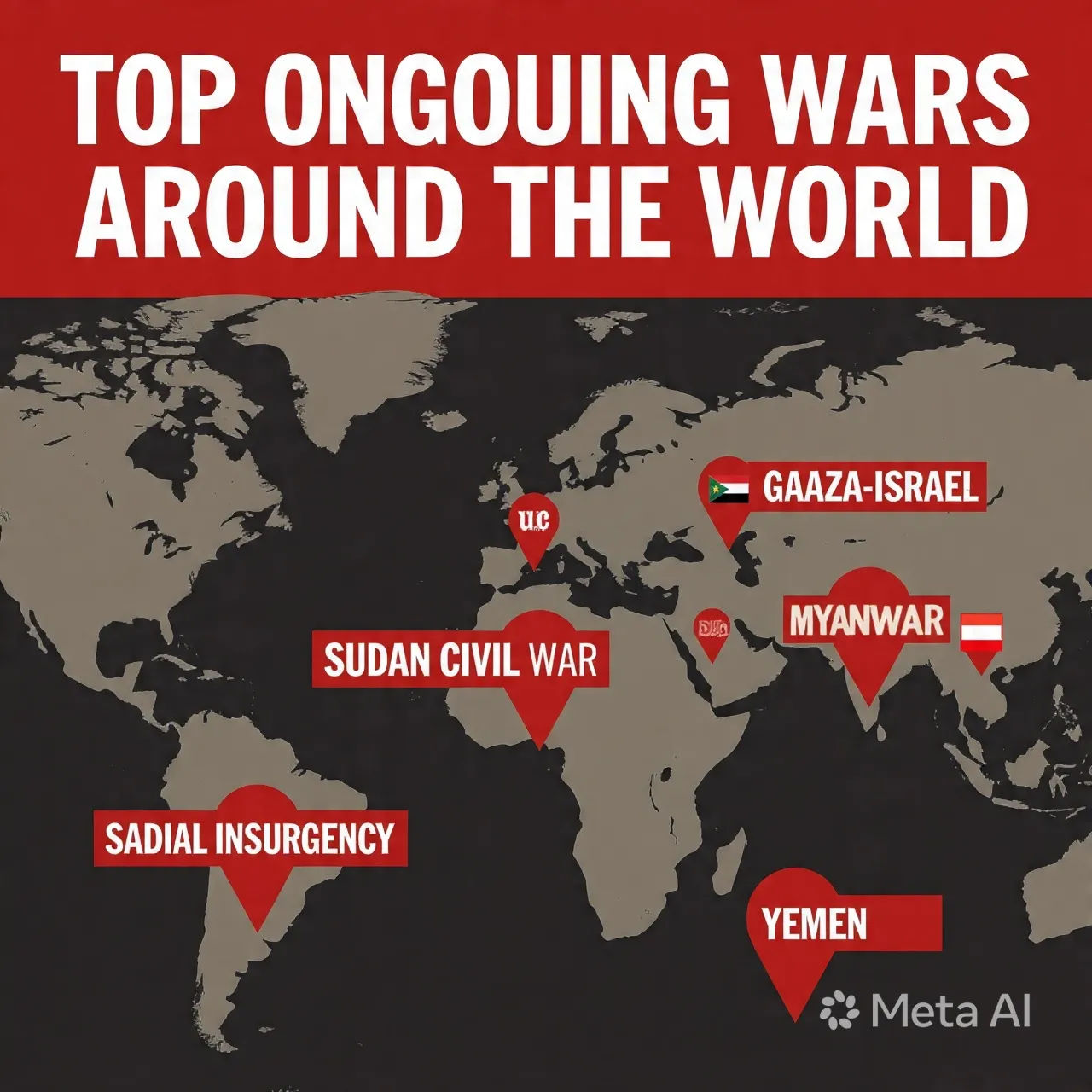
In 2026 the world faces a historic level of armed conflict, driven by historic rivalries, collapsed states, insurgencies, great-power competition, and regional rivalries. The proliferation of contemporary warfare — ranging from protracted civil wars to interstate warfare — continues to produce massive humanitarian crises, displacement, economic shocks and global insecurity.
1. Russia – Ukraine War
One of the longest and most consequential wars of the 21st century remains the full-scale conflict between Russia and Ukraine, now extending into its fifth year.
-
Origins: Russia’s unprovoked invasion of Ukraine in February 2022 triggered a full-scale war that shocked European security architecture.
-
Status in 2026: Ground fighting continues with extensive artillery duels, defensive lines in the Donbas and Kharkiv regions, and continued drone and missile strikes. Both sides incur heavy casualties.
-
Impact: Massive destruction of infrastructure, grain export disruptions, global energy market volatility, and intense diplomatic efforts by Western and EU states to support Ukraine’s defense efforts.
Why it matters
-
This conflict continues to define NATO-Russia relations and is the central front in contemporary great-power rivalry.
-
It has reshaped global defense spending and geopolitical alignments.
2. U.S. – Iran / Israel – Iran War (2026 Middle East Escalation)
In early 2026, a major new interstate war erupted in the Middle East involving the United States, Israel, and Iran.
-
Trigger: In late February 2026, coordinated U.S. and Israeli airstrikes struck key Iranian military sites, reportedly including Tehran, marking a dramatic escalation.
-
Iran’s retaliation: Iran fired missiles and drones at Israel and other Gulf states. Combat has spread, involving Iranian-aligned militias in Iraq, Lebanon’s Hezbollah, and other regional actors.
-
Regional instability: Gulf states — including Saudi Arabia, UAE, Kuwait and Qatar — see rising diplomatic tensions and occasional skirmishes. Global oil markets and civilian mobility have been affected as airlines cancel flights.
Key Points
-
This conflict marks one of the most dangerous expansions of violence in the Middle East since the Gulf War era.
-
The risk of broader regional conflagration remains high, with global economic risks intensifying.
3. Sudanese Civil War (2023–Present)
The Sudanese civil war continues as one of Africa’s deadliest conflicts, pitting rival armed forces and rebel factions against each other.
-
Factions: The Sudanese Armed Forces (SAF) versus the Rapid Support Forces (RSF).
-
Drivers: Power struggles following a failed political transition, ethnic tensions, and competition for natural and political resources.
-
2026 dynamics: Fighting has intensified in Kordofan and other regions, with drone strikes, daily combat, and severe humanitarian impact — including famine risk for displaced populations.
Humanitarian crisis
-
Millions are displaced internally or as refugees.
-
Infrastructure destruction, blocked aid access, and civilian casualties continue unabated.
4. Afghanistan – Pakistan War (2026)
In early 2026, large-scale hostilities erupted between Afghanistan and Pakistan, marking a sharp escalation from years of sporadic skirmishes.
-
Causes: Islamabad accused Kabul — under the Taliban government — of harboring militants (especially the Tehreek-e-Taliban Pakistan and allied groups) used to launch attacks inside Pakistan.
-
2026 escalation: Pakistan conducted strikes across the Afghan border in response to militant attacks. Continued cross-border gun battles, drone strikes, and aerial operations have caused rising casualties.
Significance
-
This open conflict between neighboring states after decades of insurgency signals a dangerous regional escalation.
-
It may impact India-Pakistan relations, Central Asian stability, and global counter-terrorism efforts.
5. Myanmar Civil War (2021–Present)
After the military coup in 2021, Myanmar descended into a brutal civil war involving the junta and numerous ethnic and resistance groups.
-
Parties: Myanmar’s State Administration Council (SAC) versus ethnic armed organizations and pro-democracy militias.
-
State of conflict: Major towns and regions (Rakhine, Shan and Chin states) remain contested. The junta’s air campaigns and ground offensives meet stiff resistance.
Human impact
-
Millions displaced internally or forced to flee abroad.
-
Widespread reports of atrocities and severe civilian suffering.
6. Other Ongoing and Significant Conflicts
Civil and Insurgency Warfare in the Sahel
Countries such as Mali, Burkina Faso and Niger continue to experience jihadist insurgencies, coups and violent fragmentation — worsening security and governance crises.
Criminal Violence and Instability in the Americas
Areas including Haiti and parts of Central America face persistent violent conflict — less formal war, but highly destructive civil insecurity.
Other Protracted Conflicts
Multiple low-intensity wars continue — including in Ethiopia, border tensions in the Horn of Africa, and other insurgent hotspots globally.
Global Conflict Trends in 2026
Across the world, conflict intensity and frequency are among the highest seen in decades:
-
Armed hostilities are widespread across continents — from Africa and Asia to Europe and the Middle East.
-
Conflict metrics indicate over 200,000 violent events and hundreds of thousands of deaths in recent reporting periods, reflecting persistent instability.
Why World Conflict Levels Are High
-
Failed political transitions and weakened state institutions.
-
Revived territorial disputes and regional rivalries.
-
Non-state armed groups and insurgencies exploiting governance vacuums.
-
Strategic rivalries between major powers, shaping local wars into global proxies.
Conclusion
The state of global warfare in 2026 presents a multi-layered picture of protracted wars and rising flashpoints — from conventional interstate wars (e.g., U.S.–Iran, Russia–Ukraine) to civil wars and insurgencies in Africa and Asia. These conflicts profoundly shape global politics, economics, humanitarian conditions and international security.
Understanding these wars is crucial for policymakers, scholars and citizens who seek to grasp not just the immediate human cost, but the long-term implications for peace, stability and global governance.